
Every year, thousands of workers are injured in incidents that better information could have prevented. AI in safety management is changing that equation: cameras that notice a missing hard hat, sensors that feel a machine wearing out, and analytics that spot the pattern in a thousand near-miss reports before it becomes an accident. This is not science fiction — these systems are already running on factory floors, construction sites and warehouses. Here is how the technology works and what it takes to use it well.
Eyes everywhere: computer vision on the front line
The most visible application is also the simplest to understand. Cameras paired with AI models watch work areas continuously and flag what humans would miss. As employment law firm Ogletree Deakins describes in its guide to AI in manufacturing safety, these systems can spot a worker entering a press area without safety glasses, detect missing hard hats, eye protection or gloves, and watch restricted zones around hazardous machinery — sending an alert the moment someone steps where a collision could occur.
The advantage is constancy. A supervisor cannot watch every corner of a plant at once; a camera system can, and it does not get tired at the end of a long shift. As EHS Today reports, AI-enabled facility cameras can automatically identify risky situations, capture footage and transmit it to leaders for reporting and remediation — turning every camera into a tireless safety observer.
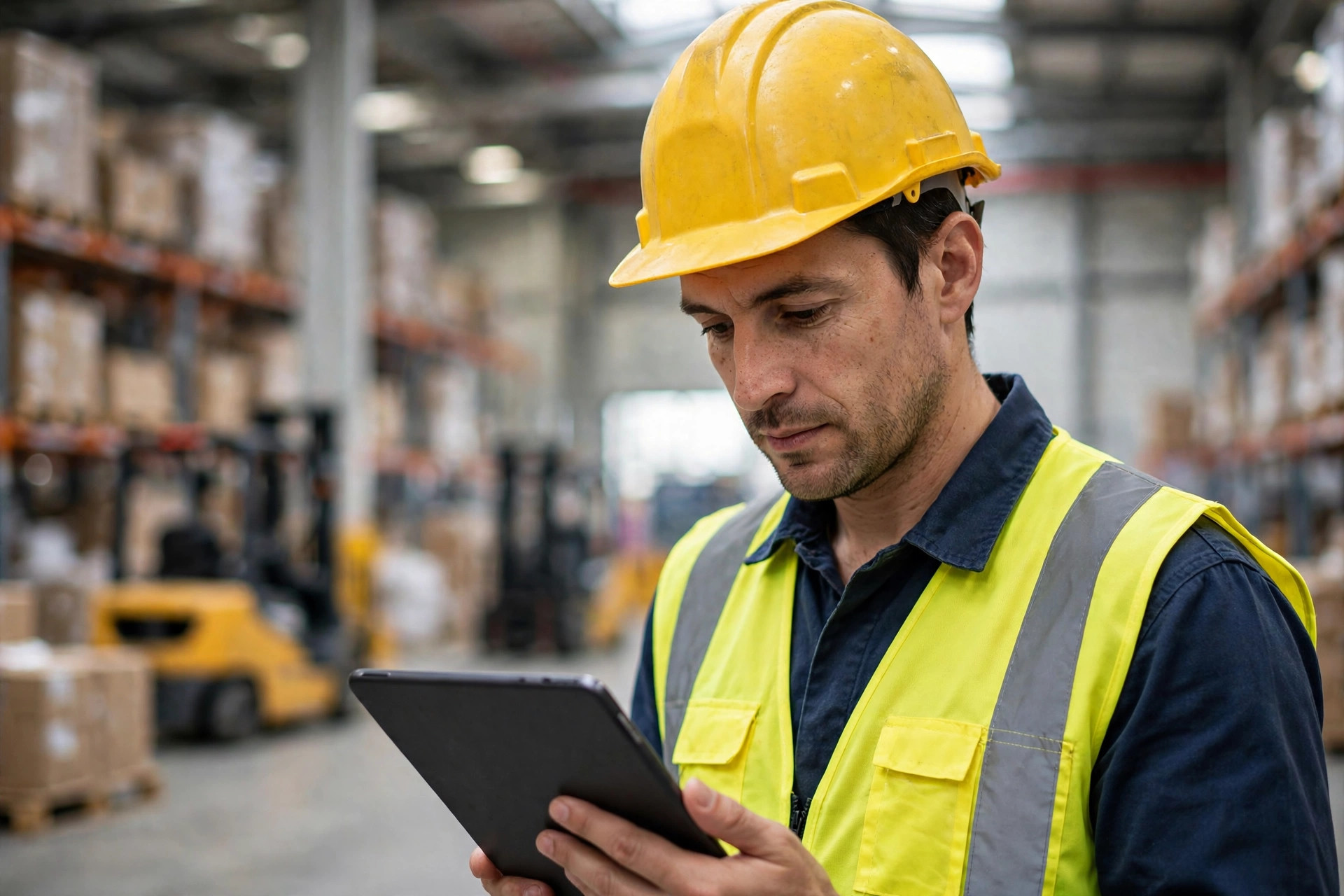
Predicting failure before it hurts someone
Some of the most valuable safety AI never looks at people at all — it listens to machines. Sensors on motors, conveyors and presses pick up vibration patterns, temperature changes and other signals that have historically preceded breakdowns. AI models trained on that history can warn maintenance teams that a failure is likely, so the repair happens on a planned schedule instead of as a dangerous emergency fix in the middle of a shift.
The same predictive thinking applies to incident data itself. Organisations sit on years of incident and near-miss reports that no human team has time to read in full. AI can sort through those volumes and surface the trends — the shift, the line, the task type where trouble keeps brewing — that would be invisible in a spreadsheet. EHS Today's analysis highlights exactly this: analysing troves of safety data to identify unsafe behavioural or operational patterns, and even simulating scenarios with generative AI to find risks before they materialise.
From reactive to proactive: the real shift
Traditional safety management is largely reactive: an incident happens, it gets investigated, procedures get updated. AI flips the sequence. Predictive alerts, real-time monitoring and data-driven decision support let safety teams intervene while a hazard is still developing — rerouting a forklift, pausing a task, retraining a crew — rather than writing a report afterwards. Generative tools like ChatGPT can even help draft scenario simulations and safety communications, while autonomous AI agents are beginning to handle routine monitoring workflows end to end.
That proactivity also changes the culture. When workers see hazards caught and fixed before anyone gets hurt, safety stops feeling like paperwork and starts feeling like something the organisation genuinely invests in.
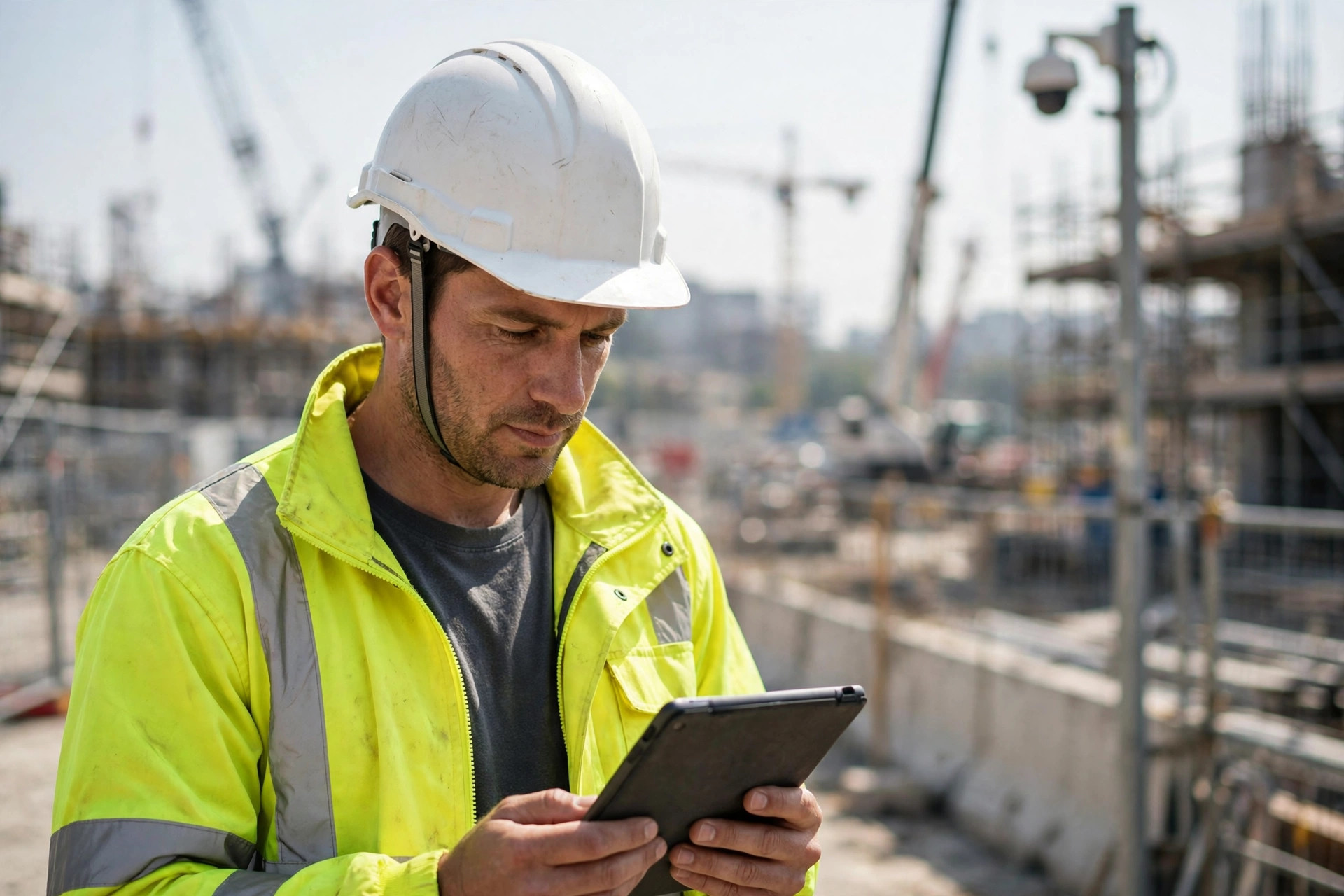
The human stays in charge
Here is the critical caveat, and the experts are unanimous on it: AI is a safety ally, not a safety manager. Ogletree Deakins stresses that AI works best as a tool supporting human judgement, not replacing it — and that employers retain full responsibility for regulatory compliance no matter how sophisticated their systems are. If workers assume "the system will catch it," basic safety practices can quietly slip.
Effective programmes therefore build human oversight in from the start: deciding who owns each alert and how fast they must respond, validating system performance under real site conditions, keeping people — not algorithms — in charge of stop-work decisions, and training everyone on what the tools can and cannot do. Document the oversight, audit it regularly, and invite workers to report AI failures without fear of retaliation.
Getting started without overreaching
Organisations new to this space should start narrow: one hazard, one site, one clear goal — fewer unguarded-machine incidents, say, or earlier detection of equipment wear. Prove the value there, then expand. Assess the existing human safety team first, identify the real hazards before buying technology, and choose tools tied to specific safety outcomes rather than impressive demos.
AI in safety management will not eliminate risk — no technology can. But paired with strong human oversight, clear accountability and a genuine safety culture, it catches hazards people miss, predicts failures before they happen, and gives every worker a better chance of going home safe. That is a future worth building.


